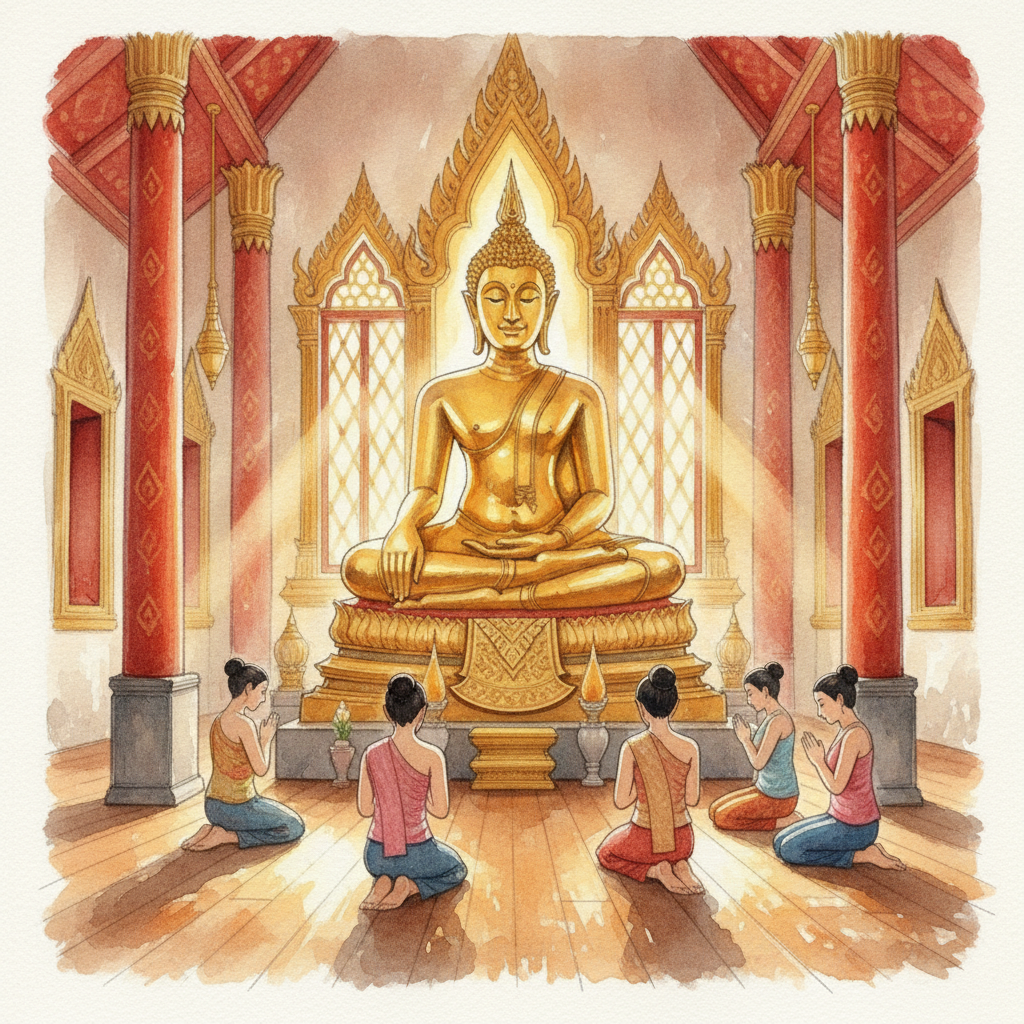
The country's chief executive and his spouse traveled to Wat Phra Sri Rattana Mahathat in Phitsanulok Province to pay reverence to Phra Phuttha Chinarat during the holiday period, and participated together in the yantra-hand-inscription ceremony with Luang Pho Samlee. This demonstrated the devotion and Buddhist faith that the country's leader continues to uphold and practice.
Phra Phuttha Chinarat: Sacred Buddha Image, Guardian of Home and Land
Phra Phuttha Chinarat is one of the most renowned Buddha images in the Maravijaya posture in Thailand. It was created during the Sukhothai period and is over 600 years old. According to Buddhist belief, Phra Phuttha Chinarat holds value in both art and spirit. Those who pay reverence typically seek blessings for auspiciousness, success in work, and prosperity in life.
Throughout Thailand's political history, leaders of every era have placed importance on paying reverence to Phra Phuttha Chinarat, especially during significant moments such as before assuming office or during important Buddhist festivals. This reflects the connection between religious faith and national administration that has been passed down since ancient times.
Yantra Hand-Inscription: An Ancient Ritual Practice
The hand-inscription ceremony is a Buddhist ritual that blends Brahmin-Hindu beliefs with Thai folk beliefs. A monk knowledgeable in yantra writes sacred characters on the palm of the person receiving the blessing. According to belief, these yantras help protect against danger, enhance auspiciousness, and increase spiritual strength for work.
Luang Pho Samlee is a monk renowned for yantra-inscription and various rituals. Many people travel to receive blessings and hand-inscriptions from him. The fact that the country's leader and his spouse received the paired hand-inscription ceremony together, according to belief, serves to reinforce stability for the family and their joint work as a married couple.
The Meaning of Worshiping at Temples During a Leader's Holiday
That the country's leader chose to spend holiday time traveling to make merit and pay reverence at temples reflects Thai culture's emphasis on making merit and seeking inner peace. Despite the burden of national administration, finding time to visit temples and practice the Dharma is something Thai leaders have continued to observe.
From the perspective of Thai astrology, the choice of day and time for visiting temples, requesting blessings, and receiving various rituals all carry significance. In particular, selecting an auspicious time according to the principles of calendar selection can enhance the effectiveness of blessings and auspiciousness. Past leaders often had personal astrologers or Brahmin priests to calculate the appropriate times for important ceremonies.
The fact that the country's administrator continues to preserve these traditions and beliefs, beyond showing respect for Thai culture, also builds confidence among the people who still uphold Buddhist faith and various rituals, that the country's leader remains concerned with the cultural and spiritual roots of the Thai people.
Compiled from publicly released news · Source: Matichon Online