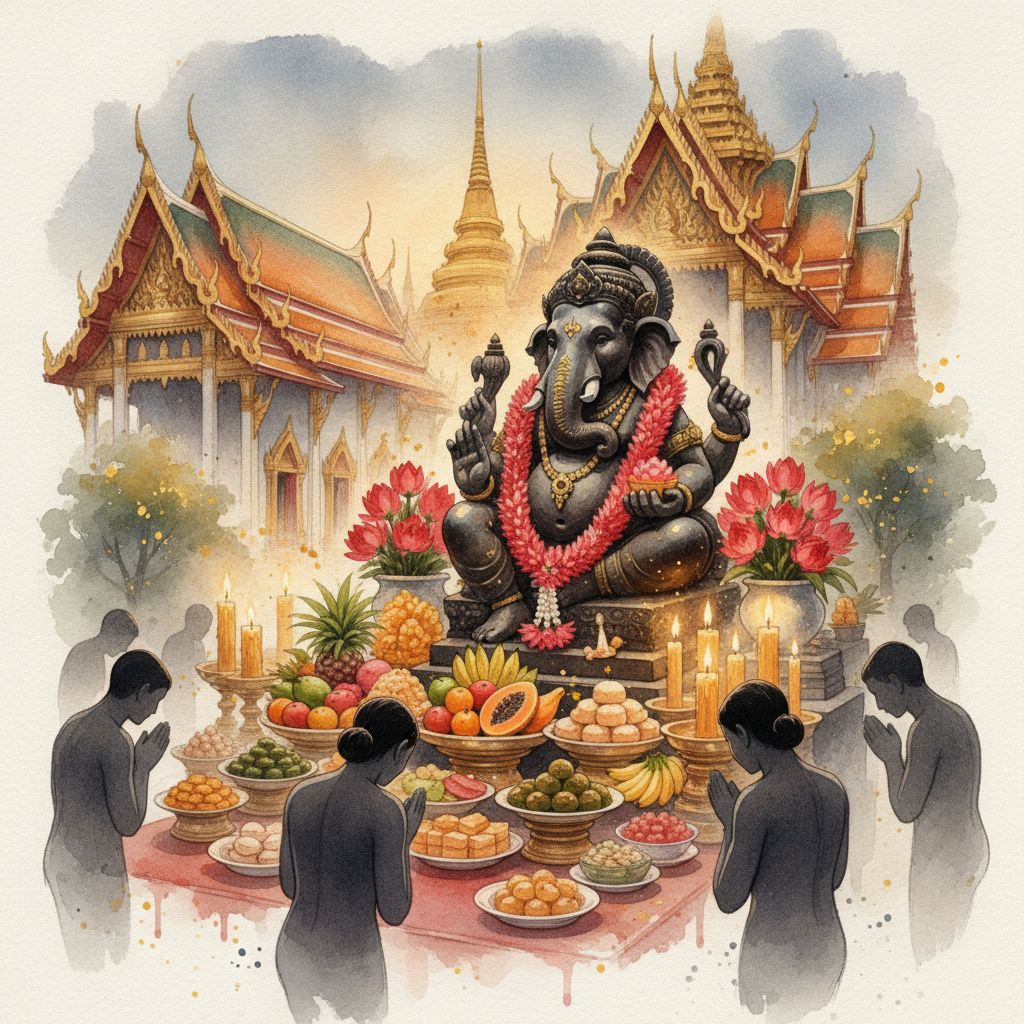
Every year when the Ganesha Chaturthi festival arrives, Thai Buddhists who revere Lord Ganesha, whom Thai people commonly call "Phra Phikhaneswor" or "Phra Khanesha," often seek out important locations to pay homage and seek blessings according to inherited beliefs. In 2569 (2026), there has been a compilation of coordinates of various important places throughout the country for those who wish to pay respects.
The Origins of Lord Ganesha in Thai Belief
Lord Ganesha is a deity with an important role in Hinduism, and has influenced the beliefs of Thai people since ancient times, particularly during the Dvaravati and Khmer periods. Lord Ganesha's distinguishing characteristic is an elephant's head, which according to legend came about when Lord Shiva severed the head of his son and replaced it with an elephant's head.
In the beliefs of Hindus and Buddhists who still revere him, Lord Ganesha is the "Remover of Obstacles" or the "God of Success." People thus commonly pay homage and seek blessings before starting important undertakings, traveling, or when facing obstacles in life. Additionally, it is believed that Lord Ganesha is the god of wisdom, arts, and learning.
What is Ganesha Chaturthi?
Ganesha Chaturthi, or as some call it "Ganesha Chaturathi," is an important festival held to celebrate the birthday of Lord Ganesha. According to the Hindu lunar calendar, it falls on the 4th day of the waning moon in the 6th month, or around August-September of each year. In India and Nepal, the celebration is held on a grand scale. In Thailand, while not as large, there are still believers who maintain this tradition.
During this festival period, the faithful bring offerings for worship, particularly sweets, fruits, and flowers. According to belief, Lord Ganesha is fond of sweets, especially "modak," a type of sweet made from flour with a sweet filling.
Principles of Paying Homage to Lord Ganesha According to Belief
According to traditional belief, paying homage to Lord Ganesha should be done with a pure heart and respect, not merely to seek personal benefits. Those who pay homage should apply the teachings and principles in their practice as well, such as using wisdom to solve problems, diligence and perseverance, and doing good deeds.
Items commonly brought as offerings include red lotus flowers, bananas, sugarcane, coconuts, and various sweets. The auspicious colors for Lord Ganesha are red, yellow, and gold. Some places also maintain the tradition of chanting prayers in Sanskrit or Pali.
Precautions for Those Who Visit to Pay Respect
For those wishing to travel to pay respect to Lord Ganesha during the festival, one should study information about the location and opening hours beforehand. One should also dress respectfully, observe the rules and regulations of the place, and should not misuse belief in ways such as blind gambling or hoping to rely solely on ritual without personal effort.
Paying homage to Lord Ganesha according to belief should serve to strengthen one's resolve and create determination within oneself, not to evade responsibility or effort in conducting one's life. Good belief should lead to self-development and doing good for society as well.
Compiled from publicly released news · Source: TrueID