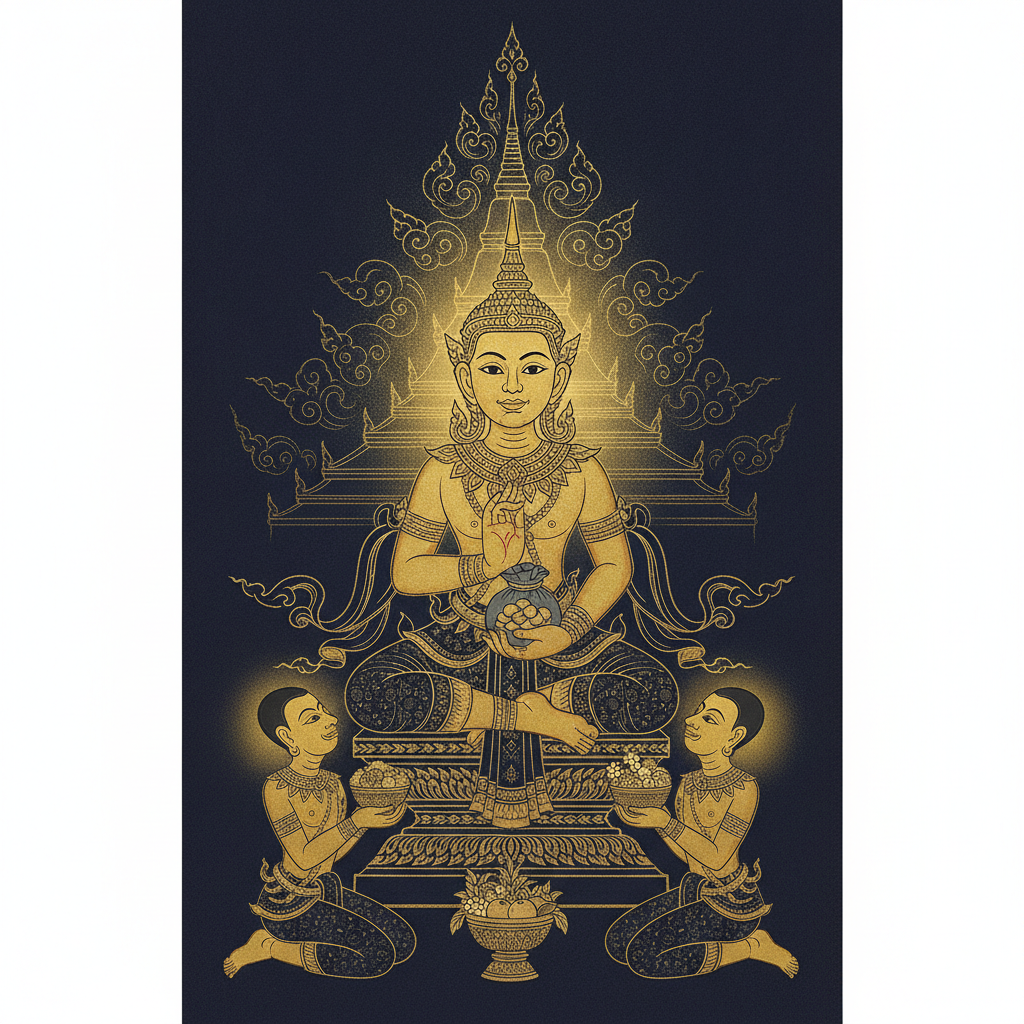
When speaking of Ai Khai of Wat Chedi, the legendary figure known throughout the country, the name of the "temple boy of Wat Chedi" from Sichon District, Nakhon Si Thammarat Province often comes to mind first. This is due to stories passed down among southern communities, combined with the belief "ask and receive, pay respects and fulfill" that has drawn devotees in an unbroken stream. Ai Khai has thus been revered as a divine child with power and a unique personality unlike any other.
The Legend of Ai Khai of Wat Chedi — Multiple Versions, Many Stories
What makes Ai Khai of Wat Chedi particularly interesting is that his legend does not exist in just one version, but in multiple versions passed down through communities, with no definitive conclusion as to which is the original. According to research by Anuchsara Ruangmak (2559) and Satsipim Isravattana and Suchita Manakit (2565), the stories can be summarized into two main versions:
Version One: The Devoted Disciple of Luang Pu Thuat
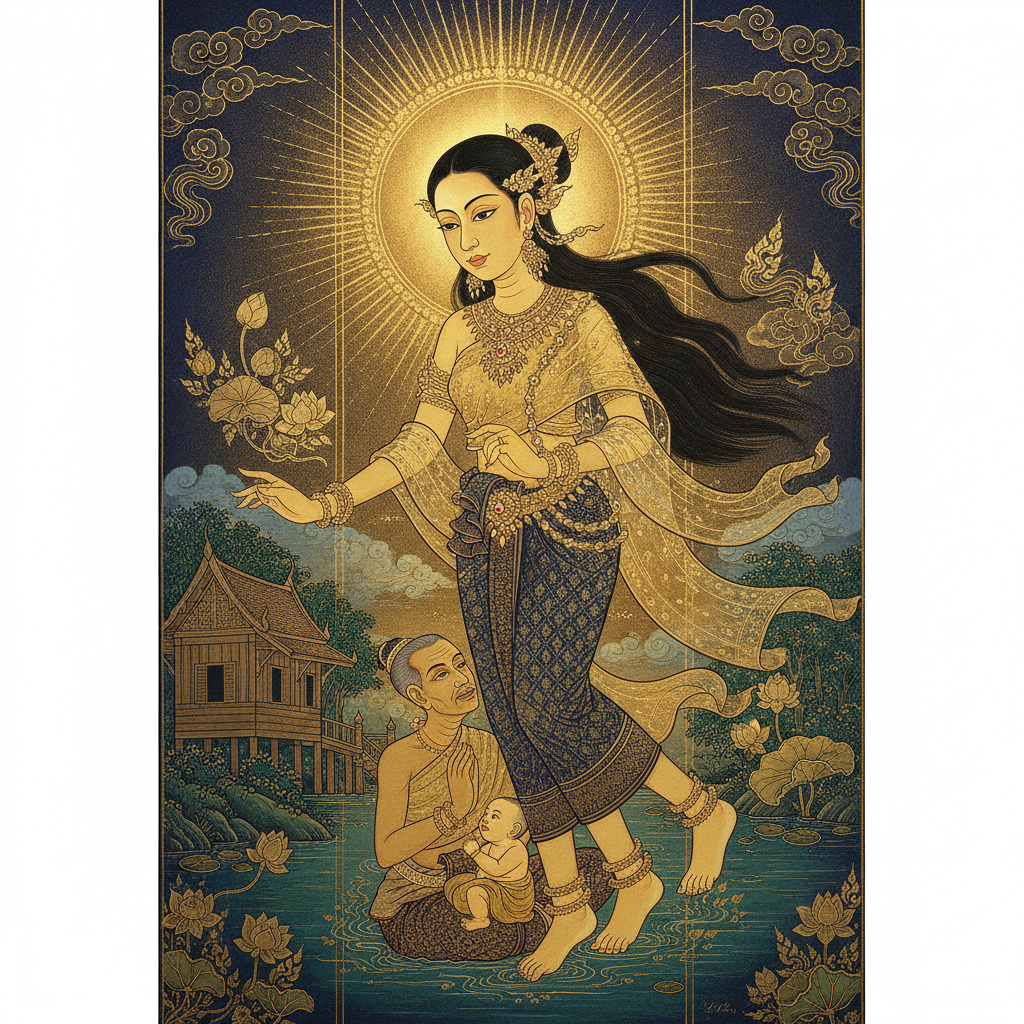
According to this version of the story, Ai Khai was a boy around 9–10 years old who followed Luang Pu Thuat Stepped-on-water, the legendary southern Thai master. When Luang Pu Thuat passed through the area of Wat Chedi, which at that time was an abandoned temple with no monks in residence, Luang Pu Thuat entrusted this boy with the duty of guarding the temple and preserving this sacred place. The boy accepted this responsibility with sincerity and loyalty, and according to belief, his spirit remains bound to this temple to the present day.
This version clearly connects Ai Khai with the merit of Luang Pu Thuat, giving the sanctity of the boy added weight through the power of this great master whom southern Thai people hold in high regard.
Version Two: The Spirit of a Local Boy Bound to the Temple
Another version tells that Ai Khai was a local boy from the Wat Chedi area who died in the water near the temple. Because he was connected to this place during his life, his spirit did not depart but remained wandering and dwelling at Wat Chedi. Villagers who passed by began to sense the presence of this spirit, and when their wishes were fulfilled, word of Ai Khai gradually spread to wider circles.
This version reflects the belief in local spirits common in southern Thai culture, which holds that those who die by accident or at an untimely age often possess strong spiritual power.
Why the Name "Ai Khai"?
Many people wonder what "Ai" and "Khai" mean. According to research by Anuchsara Ruangmak (2559), the word "Ai" in southern Thai dialect is a prefix used to address boys in general, with no derogatory meaning whatsoever. It is a familiar, friendly form of address, just as southern Thai people call ordinary boys "Ai nee" or "Ai nan." As for "Khai," it is simply the name of this boy. Thus "Ai Khai" simply means "a boy named Khai," a name that sounds simple and familiar to the life and culture of southern villagers.
Ai Khai ≠ Kumarn Thong
It is important to understand that according to widespread stories and beliefs, Ai Khai is not Kumarn Thong in the sense known in occult rituals. Kumarn Thong in its original meaning is associated with specific rituals involving complex procedures, but Ai Khai is a child spirit bound to the temple according to local belief and is revered as a divine child dwelling in the sacred grounds of a Buddhist temple. Belief thus blends the spirit path (the temple boy spirit, southern Thai local belief) and the Buddhist path (the legend linked to Luang Pu Thuat, the shrine situated in a temple) harmoniously, which is a characteristic commonly found in Thai Buddhist belief that integrates multiple belief systems.
Wat Chedi and Its Restoration
According to information recorded in research by Satsipim Isravattana and Suchita Manakit (2565), Wat Chedi was restored after B.E. 2500 and underwent major renovation again in B.E. 2526 under Luang Pho Thuem, the abbot at that time, who commissioned the first series amulets of Ai Khai. This marked the beginning of Ai Khai's fame spreading beyond the local community to wider circles, and he later became known at the national level.
The Belief "Ask and Receive, Pay Respects and Fulfill" — The Heart of Devotion
The belief that devotees of Ai Khai hold and speak of most frequently is "ask and receive, pay respects and fulfill" which reflects the belief that if one's wishes are granted after making a vow, the person must return to pay respects as promised. According to research by Anuchsara Ruangmak (2559), this belief is the core of the relationship between devotees and Ai Khai, characterized as an exchange where both parties must keep their promises, which aligns with Ai Khai's personality of being believed to be a sincere boy who keeps his word.
The Personality and Nature of Ai Khai of Wat Chedi (Divine Child) as Reflected in the Legend
Although Ai Khai is a child spirit, according to stories widely circulated among devotees, his personality is distinct and uniquely interesting.
Mischievous but Charming: According to the stories, Ai Khai is a boy with a mischievous nature typical of children, cheerful and full of energy, which makes devotees feel close and warm rather than frightened or mystified. Instead, they feel as though they have a little friend helping them nearby.
Brave and Responsible: Though only a child, according to the legend linked to Luang Pu Thuat, Ai Khai dared to take on the duty of guarding an abandoned temple alone. This reflects courage that is extraordinary for a child of that age.
Sincere and True to His Word: Both versions of the legend reflect Ai Khai's attachment and sincerity toward the place and his commitments, whether accepting Luang Pu Thuat's request to guard the temple or his spirit remaining bound to the temple even after death. This personality is what gives the belief "ask and receive, pay respects and fulfill" such deep meaning, because devotees believe that if Ai Khai keeps his promise, then those who ask must keep theirs as well.
Approachable and Easy to Connect With: Being a child rather than a high-ranking deity or powerful force seeming distant, devotees feel they can speak and confide their troubles directly, as if seeking help from a trusted friend.
Why People Commonly Make Vows to Ai Khai of Wat Chedi (Divine Child) for These Things
Research by Anuchsara Ruangmak (2559) surveying those who make vows to Ai Khai found that people ask for many different things, which can be traced back to the boy's personality and legend as follows:
Work and Studies: According to belief, Ai Khai who responsibly cared for the temple with diligence and sincerity is seen as having power to aid in matters of effort and responsibility. Those taking exams, seeking employment, or desiring advancement in their work commonly make vows to him for these things.
Safety: The legend of Ai Khai courageously guarding the temple leads devotees to believe he has power to protect and safeguard, especially for those traveling far or in dangerous circumstances.
Luck and Business: According to widespread belief among devotees, Ai Khai is seen as helping improve fortune in matters of luck and commerce, which aligns with his approachable and easy-to-access personality, making merchants feel comfortable asking for his help.
Love: According to belief, those wishing for smooth relationships or seeking a companion also commonly make vows. Though the connection to the legend is less clear than for other matters, the closeness and approachable nature of Ai Khai likely makes people feel comfortable sharing personal matters concerning love.
Recovery of Lost Items: This is one of the most frequently mentioned matters among devotees. According to widespread belief, Ai Khai, as the guardian of the temple who knows every corner of the grounds, is seen as able to help return lost things.
All the matters mentioned are based solely on the belief of devotees and do not constitute any guarantee of results.
Where to Worship Ai Khai of Wat Chedi (Divine Child)
The original shrine of Ai Khai, the temple boy of Wat Chedi, is located at Wat Chedi (Ai Khai Shrine), Ban Bodhi Sed Village 7, Chaloem Subdistrict, Sichon District, Nakhon Si Thammarat Province. Inside the temple are many rooster statues that devotees have brought as fulfillment of vows, which has become a distinctive image of this place. Devotees from throughout the country commonly travel here to make vows and pay respects at this temple directly, as the birthplace of the Ai Khai legend.
To find other places to worship Ai Khai of Wat Chedi in other provinces, you can visit find places to worship Ai Khai of Wat Chedi throughout the country
Methods of Worship According to Belief
According to research by Anuchsara Ruangmak (2559) and Satsipim Isravattana and Suchita Manakit (2565), offerings commonly brought to pay respects and make vows to Ai Khai according to belief include:
- Rooster Statues — the most popular offering, so many rooster figurines fill the temple they have become a symbol of Wat Chedi
- Firecrackers — commonly lit to pay respects and announce fulfillment of wishes
- Children's Military Uniforms, Police Uniforms — reflecting the view that Ai Khai enjoys wearing attractive clothes
- Picture Books, Toys — things boys like, consistent with the mischievous personality in the legend
- Boiled Eggs, Red Water, Pastries — foods believed to be liked by children
Regarding the origin of making vows with roosters and firecrackers, according to stories widely circulated among devotees, it is believed that Ai Khai likes cockfighting as befits a southern boy familiar with this tradition deeply rooted in local communities. As for firecrackers, they are believed to be something boys like because of the loud noise and festive atmosphere. Lighting firecrackers thus serves both to announce good news and to bring joy to the boy.
Regarding other specific prohibitions, no texts or research clearly specify them. The general principle to follow is to worship with a calm heart, dress respectfully, respect the temple's rules and the place, and if your wishes are granted, return to pay respects and fulfill your vow as promised, following the principle of "ask and receive, pay respects and fulfill."
If interested in auspicious dates for travel to worship, you can check the auspicious calendar that suggests suitable days to pay respects, and if you wish to know which deity best aligns with your destiny, you can ask our assistant which deity suits your destiny.
Frequently Asked Questions About Ai Khai of Wat Chedi
Are Ai Khai and Kumarn Thong the same?
According to widespread stories and beliefs, Ai Khai is not Kumarn Thong in the sense known in occult rituals, but rather a child spirit bound to Wat Chedi according to southern Thai local belief and revered as a divine child dwelling in the sacred grounds of a Buddhist temple. The belief blends the spirit path and the Buddhist path, which is a typical characteristic of Thai Buddhist belief.
What does the word "Ai" in the name Ai Khai mean?
According to research by Anuchsara Ruangmak (2559), "Ai" in southern Thai dialect is a prefix used to address boys in general and has no derogatory meaning, but is a familiar, friendly form of address. "Ai Khai" thus means simply "a boy named Khai."
How many versions of the Ai Khai legend are there, and which is the original?
According to research gathered, there are at least two main versions of the Ai Khai legend: one in which Ai Khai is a disciple whom Luang Pu Thuat entrusted to guard the temple, and another in which Ai Khai is a local boy who died in water near the temple and whose spirit became bound to it. Both versions continue to be told together, and there is no definitive conclusion as to which is the original.
Why are roosters and firecrackers used as offerings?
According to stories widely circulated among devotees, it is believed that Ai Khai likes cockfighting as befits a southern boy familiar with this tradition in local culture. Firecrackers are believed to be something boys like because of the loud noise and festive excitement. Lighting firecrackers thus serves both to announce good news and to show joy to the boy. However, no texts formally document the origin of this custom.
Ai Khai of Wat Chedi is one of the divine children with many versions of stories and deep connections to southern Thai communities. Regardless of which version one believes, what runs through all accounts is the image of a sincere boy who keeps his word, and the principle of "ask and receive, pay respects and fulfill" that remains alive in the hearts of devotees to this day. If you are interested in stories of sacred things and beliefs that can be verified, feel free to read our other articles, such as An 8-year-old boy survives sudden flooding with a tree, believed to be protected by merit or Working direction by birth date to enhance fortune in life and work
References
- Anuchsara Ruangmak (2559). Ask and Receive, Pay Respects and Fulfill: Ai Khai of Wat Chedi. Asian Journal of Arts and Culture 16(1):28-54. https://so06.tci-thaijo.org/index.php/cjwu/article/view/95381
- Satsipim Isravattana and Suchita Manakit (2565). Cultural Landscape Change Due to Belief: A Case Study of Wat Chedi (Ai Khai). Journal of Buddhist Social Sciences and Anthropology 7(4). https://so04.tci-thaijo.org/index.php/JSBA/article/download/253451/175083/997261
- Thai Rath. Ai Khai, Temple Boy of Wat Chedi. https://www.thairath.co.th/lifestyle/culture/2000361