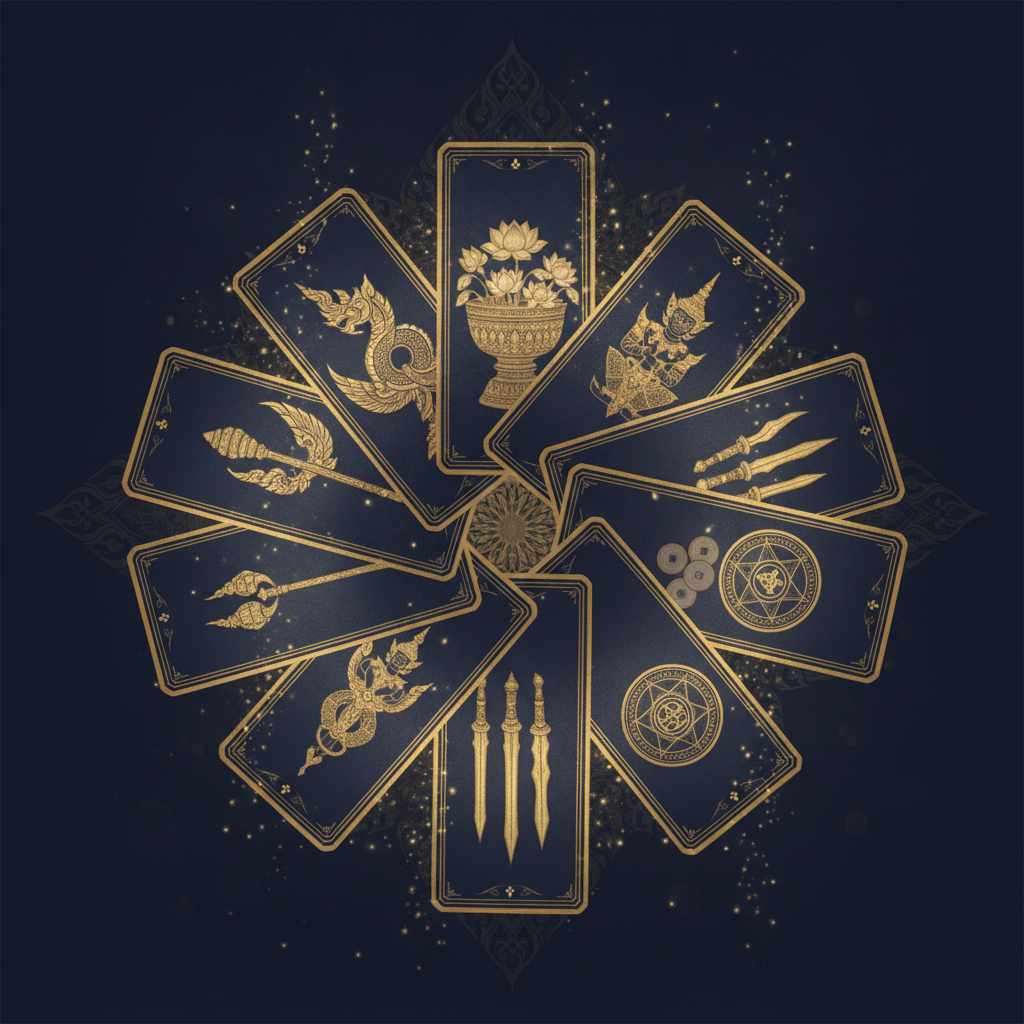
When it comes to tarot, many people think of mysterious card images used to predict fate. But did you know that among all 78 cards in a tarot deck, there is one group that is most closely connected to our everyday life? That is the Minor Arcana, consisting of 56 cards divided into 4 suits, each reflecting different energies and dimensions of life in fascinating ways. This article will guide you to understand this group of cards in detail, so that your tarot readings become deeper and more accurate.
What is the Minor Arcana and how does it differ from the Major Arcana?
A standard tarot deck contains 78 cards total, divided into two major groups: the Major Arcana with 22 cards, and the Minor Arcana with 56 cards. If the Major Arcana speaks to universal energies, major life lessons, or significant turning points in destiny, the Minor Arcana is like the everyday stories we face daily—whether in relationships, work, emotions, or small decisions.
According to tarot tradition passed down through the years, the Minor Arcana is viewed as a "mirror of life" that reflects current situations, feelings, and choices right in front of us. Unlike the Major Arcana, which often indicates fate or greater powers, if you're interested in trying to read cards yourself, you can try our free divination tool.
The Structure of Minor Arcana: 4 Suits of 14 Cards
The Minor Arcana is divided into 4 suits, each containing 14 cards consisting of numbered cards from Ace through 10, plus 4 Court Cards: Page, Knight, Queen, and King. These 4 suits have different names and symbols that correspond to the four elements in Western astrology, which resembles the concept of elements in Thai astrology divided into earth, water, wind, and fire.
Suit of Wands — Fire Element
The Wands suit connects to the fire element, representing energy, creativity, courage, and inspiration. According to tarot texts, this suit often appears in questions about work, career path, new projects, or times when you need a driving force. If many Wands appear in a reading, it suggests that period is filled with energy and movement.
Suit of Cups — Water Element
The Cups suit connects to the water element, reflecting emotions, feelings, love, and interpersonal relationships. According to tarot tradition, this suit often appears in questions about love, family, friendship, or even dreams and intuition. The Cups suit thus allows us to sense the gentleness and depth of the human spirit.
Suit of Swords — Air Element
The Swords suit connects to the air element, representing thought, communication, conflict, and decision-making. According to tarot belief, this suit often reflects mental challenges, worries, or situations requiring reason and clarity. Although many Swords cards look frightening, they speak to cutting away what is unnecessary to move forward.
Suit of Pentacles — Earth Element
The Pentacles suit connects to the earth element, representing material matters, finances, health, and stability in life. According to tarot tradition, this suit often appears when asking about money, possessions, physical health, or long-term progress. The Pentacles suit is thus the most tangible and grounded suit.
What Do the Court Cards in Minor Arcana Mean?
Besides the numbered cards from Ace through 10, each suit also has 4 Court Cards: Page, Knight, Queen, and King, which often confuse beginners.
- Page — represents a person who is learning, messages, or new energy just beginning
- Knight — represents movement, courage, or a person with high energy and determination
- Queen — represents maturity, warmth, care, or a person who deeply understands that element
- King — represents power, leadership, and mastery of that element
According to tarot readers' beliefs, Court Cards may represent actual people in the questioner's life, or they may represent energy the questioner is expressing or wishes to develop, depending on the context of each reading. This is similar to the principle of reading destiny in Thai astrology by examining one's personal star and individual energy, as explained in the Nine Planets: Keys to the Secrets of Destiny.
How to Read Minor Arcana for Deeper Meaning
Reading Minor Arcana effectively requires considering multiple factors together:
- Notice which suit appears most frequently — if many Cups cards appear in one reading, it indicates that emotions and relationships are the main issues of that period
- Observe the numbers on the cards — lower numbers (Ace-3) often point to beginnings, middle numbers (4-7) to process, and higher numbers (8-10) to endings or results
- Consider reversed cards — according to many tarot schools, reversed cards may represent blocked energy, delays, or inner perspectives requiring attention
- Connect with Major Arcana — if Major Arcana cards also appear, consider them as the primary energy encompassing the situation
For those seeking deeper guidance, you can consult with our expert advisors directly for more comprehensive and targeted analysis.
Connection Between Minor Arcana and Other Divination Sciences
Interestingly, the 4-suit system of Minor Arcana is not isolated within tarot alone, but also relates to other belief systems. For example, in Western astrology, the four elements (fire, water, air, earth) form the basis for dividing all 12 zodiac signs, while Thai astrology divides elements by day of birth which affect each person's nature and destiny, as seen in the Destiny of Those Born on Friday: Nature, Work, Love, and Lucky Colors.
Additionally, according to Kabbalah and numerology beliefs, the numbers 1-10 on Minor Arcana cards have specific meanings corresponding to universal energies, making tarot a tool that integrates multiple sciences together harmoniously. If you want to follow deeper destiny analysis every day, try subscribing to personalized daily readings.
Frequently Asked Questions About Minor Arcana
Is Minor Arcana truly less important than Major Arcana?
According to tarot tradition, no card is less important than another. Although Minor Arcana speaks to everyday life stories, it provides details that Major Arcana cannot convey. Experienced readers give equal importance to both groups because good reading requires considering the complete picture.
What does it mean if only Minor Arcana cards appear in a reading?
According to many tarot schools, if a reading shows only Minor Arcana with no Major Arcana, it may mean that the situation being asked about is largely in the questioner's hands. Destiny during that period can still be changed through personal actions and decisions, which is actually a positive sign that you have the power to determine your life's direction.
Should beginners learn Minor Arcana before or after Major Arcana?
Generally, most texts recommend starting with Major Arcana first since there are fewer cards and their meanings are clearer. However, some schools recommend learning Minor Arcana alongside it from the beginning, especially understanding the four-element system and number meanings, which helps make overall tarot reading more complete.
The 56 cards of Minor Arcana are like a book of life that records every dimension of humanity, from love and work to thoughts and material security. Understanding the 4 main suits and the meaning of each card thoroughly will make your tarot readings deeper and more accurate. Whether you use the cards for self-reflection, life planning, or simply understanding the energies around you, Minor Arcana is always a good companion on the journey.