A Miraculous Survival
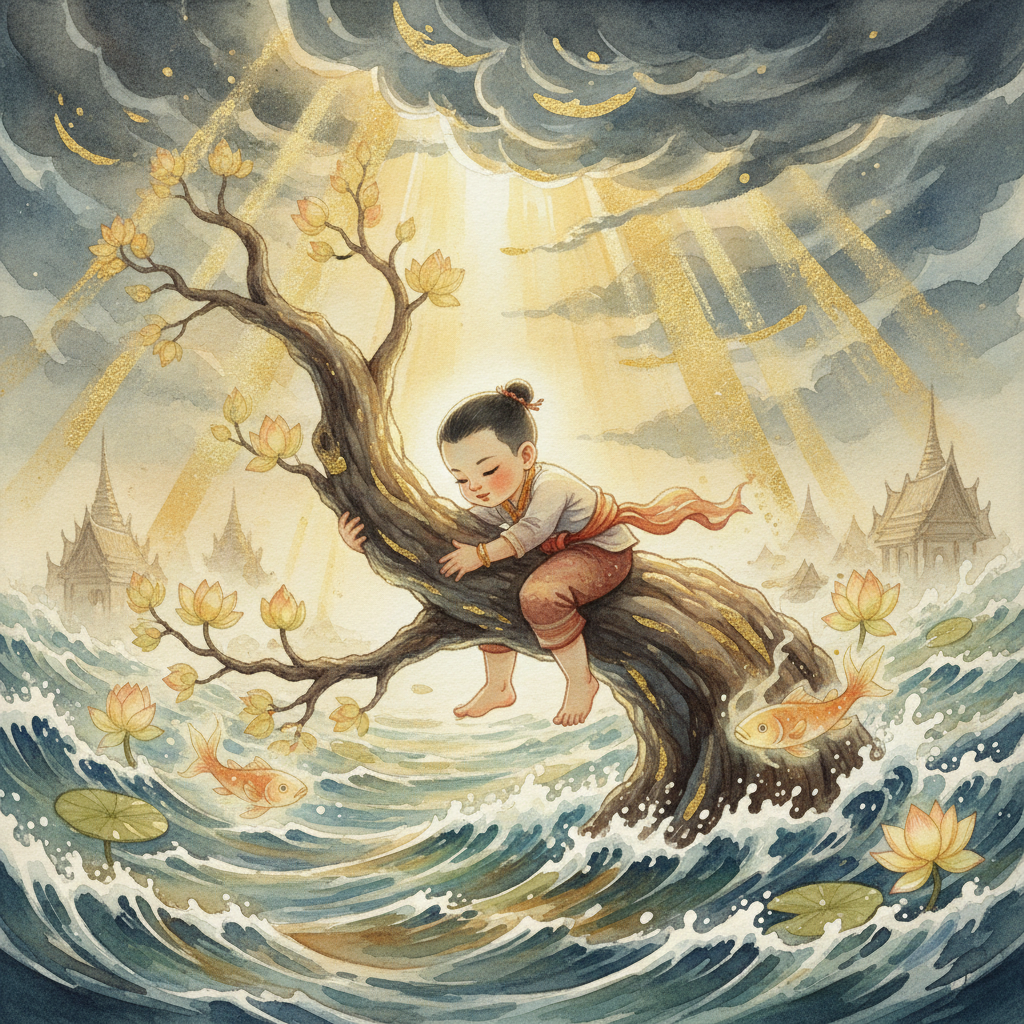
A remarkable incident occurred in Nepal when an 8-year-old boy managed to survive a powerful flash flood by clinging to a tree that was swept along by the current for several hours until he was rescued. In the eyes of local villagers and all who heard the story, the event was nothing short of a miracle.
The flash flood was extraordinarily violent, capable of sweeping away objects and people with ease. Yet the boy held on tightly to a floating tree branch and emerged from the ordeal unharmed, leading many to wonder whether some sacred force had been watching over him.
The Belief in Sacred Trees in Eastern Cultures
In the belief systems of Asian societies, including Thailand, trees are often regarded as dwelling places of celestial beings and sacred spirits. Large trees — particularly the Bodhi tree, the banyan, and the rubber tree — are held in reverence, believed to be the abodes of guardian deities and tree spirits (รุกขเทวดา, Rukkha Thewada), who protect those with pure hearts and accumulated merit.
According to Buddhist legend, the Buddha attained enlightenment beneath a Bodhi tree, and there are tales of the goddess of the Ganges River coming to the aid of those in peril. Trees are therefore not merely plants, but symbols of life, abundance, and divine protection.
Accumulated Merit and Protection from Disaster
In Buddhist teachings and folk belief, accumulated merit (บุญบารมี, bun baramee) is considered a shield in times of danger. Countless stories have been passed down about people who survived serious accidents in extraordinary ways, attributed to the merit they had built up over time or to the virtuous deeds performed by their ancestors.
When it comes to young children, ancient belief holds that they still possess pure, uncorrupted minds, free from the weight of worldly defilements, and are therefore more readily protected by celestial beings and sacred forces than adults. There is also a belief that children born with great merit carry a personal guardian deity (เทวดาประจำกาย, Thewada Prajam Kai) who watches over them and shields them from harm.
Natural Phenomena and Spiritual Interpretation
While the boy's survival may well be explained by rational factors — such as an ability to swim, the fortunate timing of grabbing a branch, or the current carrying him in a safe direction — from a spiritual perspective, events like this are seen as a testament to the power of faith and accumulated merit.
In Thai astrology, surviving a water-related danger is linked to one's fate and auspicious timing. Some people are said to have a "water fate" (ชะตาน้ำ, chata nam), meaning they must be wary of dangers involving water. Yet if their accumulated merit is strong enough, they can pass through such crises unscathed. Carrying sacred amulets (พระเครื่อง, Phra Khruang), chanting prayers, or making merit regularly are all considered ways of building an invisible spiritual armor (เกราะกายสิทธิ์, krao kai sit) according to these beliefs.
Stories like this remind us of the fragility of life and the importance of doing good. Whether or not one believes in the supernatural, cultivating a kind heart, helping others, and living with mindfulness are things that genuinely bring safety and happiness into one's life.
Compiled from publicly available news reports · Source: spacebar.th