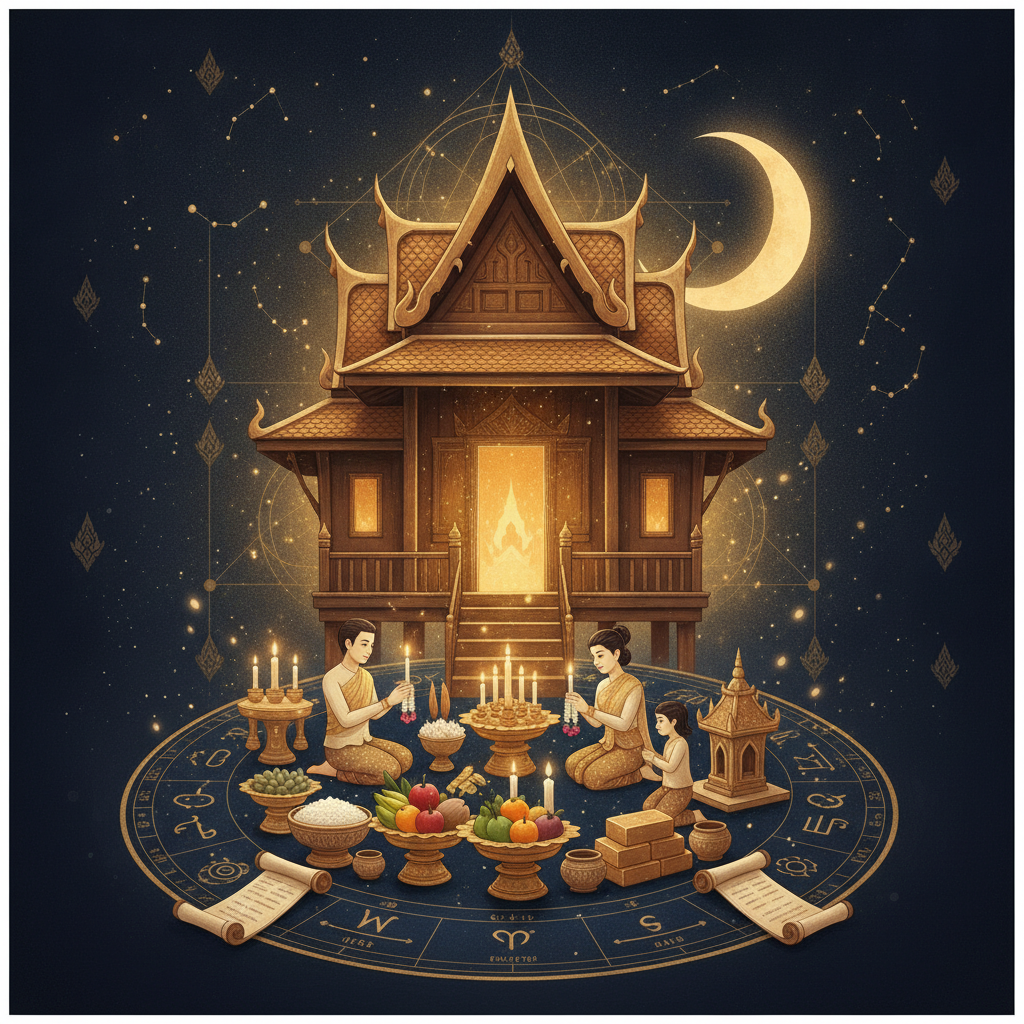
Moving into a new home is one of the most significant milestones in life, and most Thai people place great importance on selecting an auspicious time — known as a Roek Khuen Ban Mai (ฤกษ์ขึ้นบ้านใหม่), or auspicious housewarming moment — for the occasion. According to traditional belief, beginning this new chapter at the right time strengthens the life force of all residents, ensuring happiness and freedom from obstacles. Whether viewed through a psychological lens or one of faith, thorough preparation — covering the auspicious timing, propitious items, and the correct ceremonial order — all contribute to making that important day smoother and more heartfelt.
Why Thai People Place Such Importance on Choosing an Auspicious Time for Moving In
According to ancient Thai astrological texts, the nine planets (Navagraha) and the position of the moon at any given time are believed to influence the energy surrounding human beings. Choosing a moment when the planets are favorable and the auspicious timing is propitious is likened to "opening a door" to welcome good things into the home. Conversely, an inauspicious time, as defined by traditional texts, may invite conflict, loss, or turbulence into family life.
Furthermore, the housewarming ceremony has its roots in beliefs surrounding the spirit of the home (Khwan) and the sacred guardian spirits of the household — traditions passed down over hundreds of years. Performing the ceremony correctly according to custom is therefore both an act of respect toward one's ancestors and a source of reassurance for every member of the family.
Principles for Selecting an Auspicious Housewarming Time According to Thai Astrology
Calculating a truly auspicious time requires weighing multiple factors simultaneously — it is not simply a matter of picking a day that "seems good." According to Thai astrological texts, the main principles to consider are as follows.
1. Auspicious Days and Yam (ยาม)
According to traditional belief, the days most commonly favored for moving into a new home are Thursday, Sunday, and Wednesday, as these are considered days of prosperity and advancement. Tuesday and Saturday are generally avoided according to ancient texts, as they are associated with planets of intense energy that may bring conflict. The Yam — the specific time period within the chosen day — must also be calculated to align with the auspicious Yam for that particular day.
2. Dithee (ดิถี) — The Lunar Day
Thai texts favor the waxing phase of the moon, particularly from the 3rd to the 13th day of the waxing moon, as the moon is gaining light — a state believed to correspond with the growth of prosperity and wealth. The waning phase is avoided, as the diminishing moonlight is thought to cause good fortune to diminish along with it.
3. The Ruling Planet of the Homeowner's Birth Day
Expert astrologers typically request the birth date of the homeowner or head of household in order to calculate whether the chosen auspicious time is truly compatible with that person's natal chart. According to the texts, a time that is generally auspicious may not suit every individual's destiny. This verification is therefore a critical step that should not be skipped. For greater precision, you can consult with a specialist astrologer to have an auspicious time calculated specifically for your own natal chart.
Items to Prepare for the Housewarming Ceremony
The auspicious items brought into the home on the chosen day carry deep symbolic meaning within Thai belief. Each one holds the significance of blessing and of making a good beginning.
Essential Auspicious Items
- Rice, salt, and water — Symbols of abundance and the assurance that the four necessities of life will never be lacking.
- A stove or rice cooker — According to belief, fire within the home represents warmth and the continuation of life.
- A piggy bank or savings jar — Brought into the home with money already inside, symbolizing wealth that will continue to accumulate.
- An earthen pot — Filled with nine auspicious items such as rice, sesame seeds, and beans, to represent abundance and fertility.
- A Buddha image or the home's sacred object — Brought in before anything else, so that the sacred presence may protect the household.
- Auspicious flowers — Lotus blossoms, jasmine, and Dok Rak (ดอกรัก) are traditionally favored, as they are believed to carry energy that enhances auspiciousness.
Items to Avoid Bringing In on Moving Day
- Second-hand items that belonged to someone whose life was troubled — based on the belief that energy clings to objects.
- Sharp or bladed objects, such as knives or scissors, as the very first things carried through the door.
- Entirely black or entirely white items as the first set of belongings brought in, as traditional texts associate these colors with mourning and sorrow.
The Order of the Thai Housewarming Ceremony
A proper Thai housewarming ceremony follows a clearly defined sequence of steps. Specific details may vary by region, but the general framework is as follows.
- Step 1 — Invite monks to chant evening prayers. On the evening before moving day, monks are invited to chant prayers to bring auspiciousness and to dispel any negative influences from the home.
- Step 2 — Make merit by offering a meal to the monks. On the morning of moving day, food is prepared and offered to the monks, and blessings are received in return.
- Step 3 — The anointing ceremony and the tying of sacred thread. The astrologer or ceremony officiant anoints the doorways and pillars of the home and ties Sai Sin (สายสิญจน์) — consecrated white cord — around the house as appropriate.
- Step 4 — Bring the sacred objects into the home first. The Buddha image or objects of veneration must enter the home first, followed by the homeowner or the most senior member of the family.
- Step 5 — Bring in the auspicious items. These are carried in according to the prepared order, accompanied by words of blessing or personal prayers according to each family's tradition.
- Step 6 — Light incense and candles as an offering. Offerings are made to the sacred guardian spirits of the home, with prayers for peace and happiness.
- Step 7 — Hold a celebratory gathering and welcome guests. The ceremony concludes with a feast for family and friends to share in the joy and to receive blessings from elders.
Prepare Ahead of the Auspicious Day with an Advance Horoscope Reading
Beyond selecting an auspicious time for moving in, monitoring your natal chart in the period before and after the move can be highly beneficial — it helps you identify which windows of time are best suited for major decisions and which periods call for extra caution. Try our free horoscope tool to get an initial reading of your chart's energy, or if you would like ongoing guidance throughout every phase of life, you can also subscribe to a personalized daily horoscope calculated specifically from your own birth date.
Frequently Asked Questions About Auspicious Housewarming Timing
If I need to move belongings in before the auspicious day, what can I do?
According to Thai belief, if it is necessary to move items into the home before the designated auspicious day, this is treated simply as "leaving things there temporarily." You should not spend the night in the house during this period, and you should wait until the appointed auspicious day to perform the ceremony and officially take up residence. This approach is widely accepted among knowledgeable practitioners.
Whose birth date in the household should be used to calculate the auspicious time?
In general, traditional texts use the birth date of the homeowner or head of household as the primary basis for calculation. However, some texts recommend taking the birth dates of all household members into account as well, so that the chosen time is as harmonious as possible with the natal charts of every person in the family.
Are there any days or months when moving into a new home is strictly forbidden?
According to Thai belief, moving into a new home is generally avoided during a month in which a family bereavement has occurred, or during periods considered inauspicious according to the astrological calendar — such as Wan Lokawinas (วันโลกาวินาศ), a day of cosmic ill omen. That said, these specifics may differ depending on the text consulted and local traditions. Consulting a specialist will provide the most accurate guidance for your particular circumstances.
Choosing a truly auspicious Roek Khuen Ban Mai is not merely a matter of superstition — it reflects the value placed on new beginnings, something that people of every culture hold dear. Regardless of how deeply you believe in astrology, careful preparation across all dimensions — the timing, the auspicious items, and the ceremonial order — will ensure that this important day is filled with warmth, meaning, and cherished memories for every member of the family for years to come.