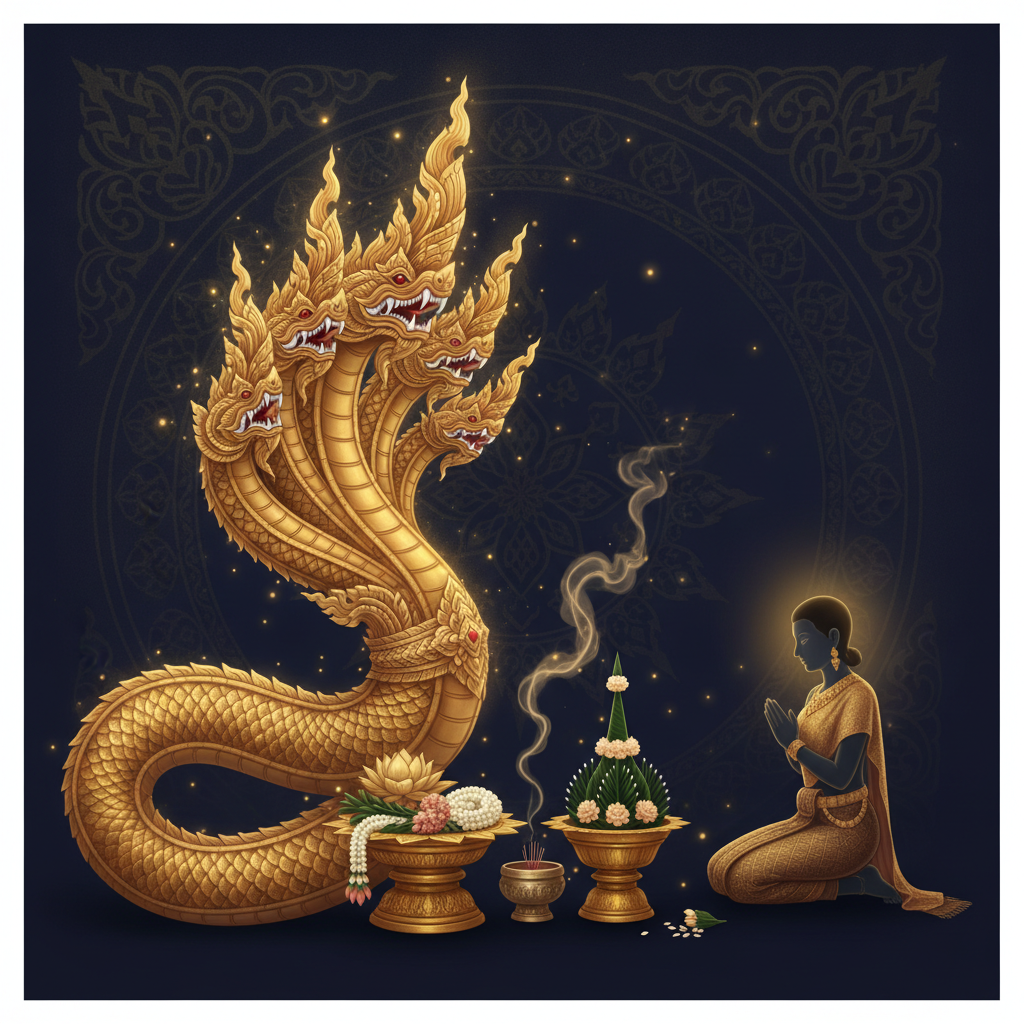
The veneration of Phaya Nak (the Naga serpent deity) is one of the most deeply rooted beliefs in Thai culture and across Southeast Asia. Many devotees hold that Phaya Nak is a sacred being who watches over and bestows blessings upon those who worship with a pure heart. If you are a spiritual seeker looking to begin venerating Phaya Nak correctly according to traditional belief, this article has everything you need to know.
Who Is Phaya Nak, and Why Venerate Him?
According to ancient scriptures and Thai folk legends, Phaya Nak is a sacred serpentine being of immense power and wisdom, dwelling in rivers, lakes, and an underwater realm known as Nakkapiphop. In Buddhist tradition, the Naga also appears as a guardian of the Dharma and a protector of the Buddha — most notably in the story of the Naga Mucalinda, who spread his hood to shelter the Buddha from a storm.
According to believers, venerating Phaya Nak with a sincere heart can strengthen one's destiny, ward off misfortune, and bring happiness and prosperity into one's life — particularly for those born in the Year of the Dragon, who, according to Thai astrological texts, share a direct spiritual bond with the Naga.
Auspicious Days and Times for Venerating Phaya Nak
According to traditional belief, choosing the right day for veneration is considered essential, as it is thought to amplify the power of the ritual.
- Thursday — According to Thai astrological tradition, Thursday is the day of teachers and sacred beings, making it ideal for paying homage to revered entities.
- The Full Moon (the 15th night of the waxing moon) — It is believed that the energy of the full moon is connected to water and aquatic beings, making it a particularly fitting time to venerate Phaya Nak.
- Ok Phansa (the end of Buddhist Lent) — This is the period when devotees believe Phaya Nak draws closest to the human world, especially along the Mekong River.
As for the most auspicious times of day, tradition favors the early hours before sunrise or the early evening after sunset — transitional moments when cosmic energy is believed to flow most freely. If you would like to know which time period best suits your personal destiny, try our free fortune-reading tool to get a preliminary check of your auspicious timing.
Popular Offerings for Phaya Nak and Their Meanings
Preparing the correct offerings according to traditional belief is considered the cornerstone of venerating Phaya Nak. Each offering carries its own meaning and origin rooted in specific traditional texts.
Essential Offerings Not to Be Omitted
- Hard-boiled eggs — According to tradition, eggs symbolize birth and abundance. They are typically offered in pairs or even numbers.
- Fresh milk or rice milk — These represent purity and nourishment, drawing from legends in which the Naga is said to favor things that are white and pure.
- Lotus flowers — The flower of Buddhism, which grows from water, is believed to be directly connected to the realm of Phaya Nak.
- Incense and candles — Gold-colored or floral-scented incense sticks are preferred; candles are typically red or gold.
- Auspicious fruits — Such as bananas, grapes, or sugarcane, which according to tradition are favored by Phaya Nak.
Offerings to Avoid
According to traditional belief, certain items should never be offered to Phaya Nak. These include all types of meat, alcoholic beverages and intoxicants, and anything with a strong, pungent odor — as it is believed these may cause harm or constitute a sign of disrespect toward the sacred being.
How to Venerate Phaya Nak Correctly According to Tradition
The steps for venerating Phaya Nak according to traditional belief are as follows:
- Cleanse the body — Bathe and dress modestly. White, green, or gold clothing is preferred, as these are considered auspicious colors associated with Phaya Nak according to traditional belief.
- Arrange the offerings — Place the offerings on a clean tray or altar table, facing east or in the direction of a body of water.
- Light the incense and candles — Light the candles first, followed by 9 or 16 incense sticks, depending on the tradition of one's particular school of practice.
- Recite the veneration words — Begin with three recitations of Namo, then recite the Phaya Nak veneration prayer as taught by one's teacher, stating your name, date of birth, and the blessing you are seeking.
- Sit in meditation briefly — To open yourself to the energy and to express reverence in a calm and composed manner.
If you would like personalized guidance on veneration practices suited to your own destiny, you can consult with our specialist astrologers, who will help analyze which manifestation of Phaya Nak is most compatible with your personal chart.
Important Guidelines and Prohibitions for Devotees of Phaya Nak
Beyond the ritual steps, traditional belief also sets out precautions that devoted followers are expected to observe strictly.
- Do not venerate with a troubled, angry, or ill-intentioned mind, as it is believed that Phaya Nak perceives the purity of a worshipper's heart.
- Do not make false oaths or speak untruths in the presence of Phaya Nak — according to traditional texts, this is considered a grave act of disrespect toward a sacred being.
- If a vow has been made, once the wish is granted, the vow must be fulfilled in full exactly as promised.
- Women who are menstruating are advised by some schools of belief to refrain from direct veneration, though paying respects from a distance is considered acceptable.
- Images or statues of Phaya Nak should never be placed in a bathroom or any unclean location.
Frequently Asked Questions About Venerating Phaya Nak
Can Phaya Nak be venerated at home?
According to traditional belief, yes — Phaya Nak can be venerated at home. A clean shrine space should be set up above waist level, not facing a bedroom or bathroom, and kept consistently clean and tidy. Placing clean water or consecrated water near the shrine area is believed to further enhance its spiritual potency.
Which birth year benefits most from venerating Phaya Nak?
According to Thai astrological texts, those born in the Year of the Dragon share a direct bond with the Naga and are believed to receive the greatest merit from veneration. Those born in the Year of the Rat and the Year of the Monkey are also considered, by tradition, to be well-aligned with the energy of Phaya Nak. That said, according to traditional belief, anyone may venerate Phaya Nak — provided they approach with a pure heart and follow the proper steps. If you would like to know which sacred being is most suited to your personal destiny, try subscribing to your personalized daily horoscope for guidance tailored specifically to your zodiac sign and birth year.
How does one fulfill a vow made to Phaya Nak?
According to traditional belief, fulfilling a vow to Phaya Nak requires presenting all the items that were promised in full. It is customary to bring a fresh set of offerings — including hard-boiled eggs, lotus flowers, and ritual items — and to speak words of gratitude while informing Phaya Nak that the wish has been granted. Some traditional schools recommend completing the vow fulfillment ceremony within 7 days of the wish coming true, as an expression of gratitude toward the sacred being.
The veneration of Phaya Nak is not merely a ritual — it is an expression of faith and reverence for what our ancestors have believed in and passed down across generations. Whether you are just beginning your spiritual journey or have been a devoted follower for many years, what matters most is a pure heart, steadfast intention, and genuine respect in practice. For according to traditional belief, all sacred beings always perceive the sincerity within the heart of those who venerate them.