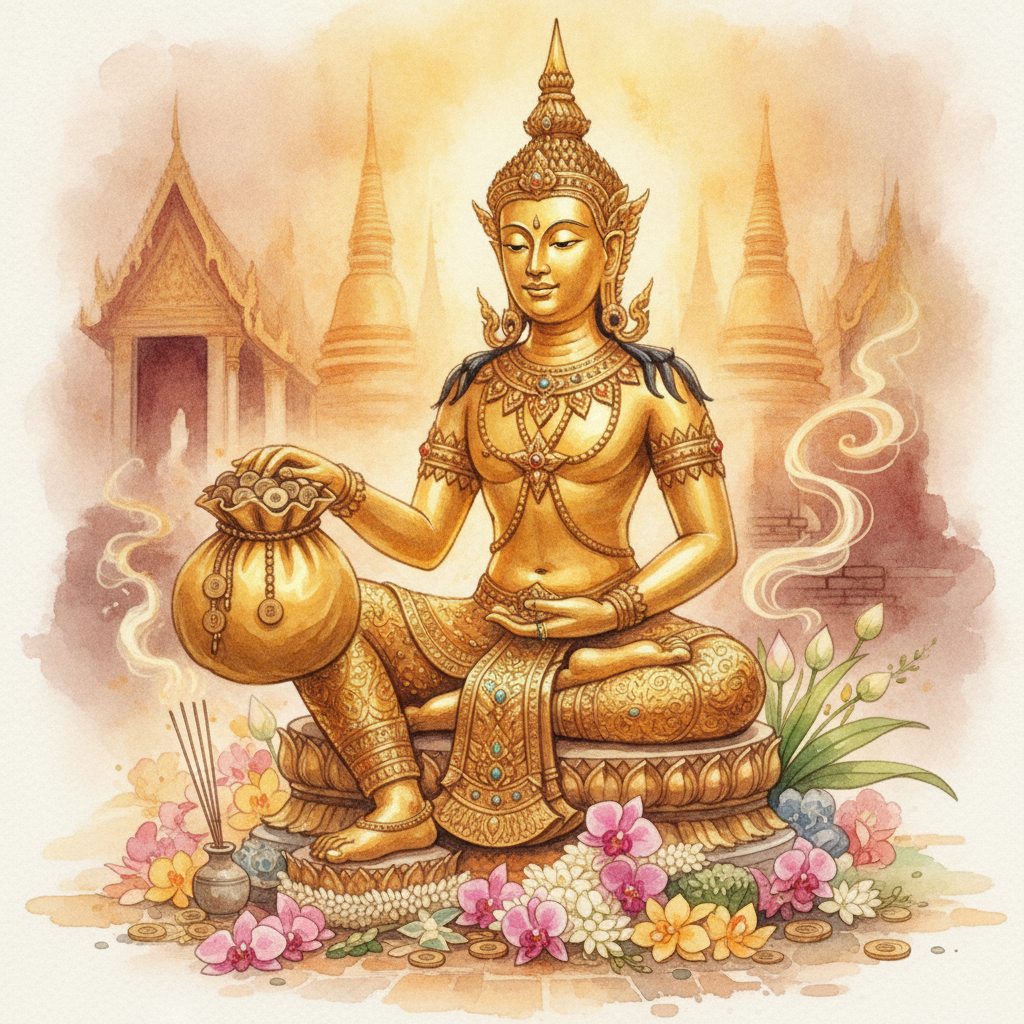
Incident at the Temple
It has been reported that large numbers of people have traveled to pay homage to Thao Wessuwan at Wat Luang Pho Somwang. Among them, a young woman came to kneel and pray before the deity with deep devotion, in keeping with beliefs passed down through generations — reflecting the widespread veneration of this divine figure among Thai Buddhists.
Thao Wessuwan in Buddhism
According to Buddhist scriptures, Thao Wessuwan — also known as "Kuvera" — is one of the Chatulokaban (จตุโลกบาล), the four guardian kings who protect the four cardinal directions. Thao Wessuwan presides over the North and serves as the divine protector of wealth and prosperity. In legend, he is described as an immensely wealthy deity who resides on Mount Kailash and commands a vast retinue of giants (Yak).
As depicted in the scriptures, Thao Wessuwan is typically shown holding a money bag in his hand, regarded as a symbol of abundance and riches. In Mahayana Buddhist art, he is frequently portrayed as a deity who bestows fortune and good luck upon his devotees.
Beliefs in Thai Society
Thai Buddhists commonly venerate Thao Wessuwan in the belief that he brings wealth, prosperity, and protection of one's possessions to the faithful. Offerings typically include flowers, incense, candles, and various ritual items, in accordance with Buddhist ceremonial practice.
Many temples across Thailand have enshrined statues of Thao Wessuwan for public worship — particularly those renowned for granting wishes related to fortune and advancement — and these temples consistently draw steady streams of devotees.
A Dhamma Perspective
While belief in deities forms part of Buddhist culture, the core teachings of the Buddha emphasize that true prosperity arises from virtuous conduct, diligent effort, and wisdom. Paying respect to sacred figures should serve as a reminder to live righteously, rather than as a means of seeking results through blind superstition.
Faith in the sacred is a personal matter, but it should go hand in hand with applying one's own effort and discernment in daily life — for according to the law of Kamma, all outcomes, good or bad, arise from one's own actions.
Compiled from publicly available news · Source: thairath.co.th