When speaking of sacred things that accompany Thai families of Chinese descent, Tee Chu Ia is one of the deities most consistently revered—in homes, shops, and businesses alike. With the belief that this deity protects land, safeguards property, and brings peace to residents, understanding the correct placement and offerings becomes essential for every household that honors this god.
Who is Tee Chu Ia and the Origin of This Belief
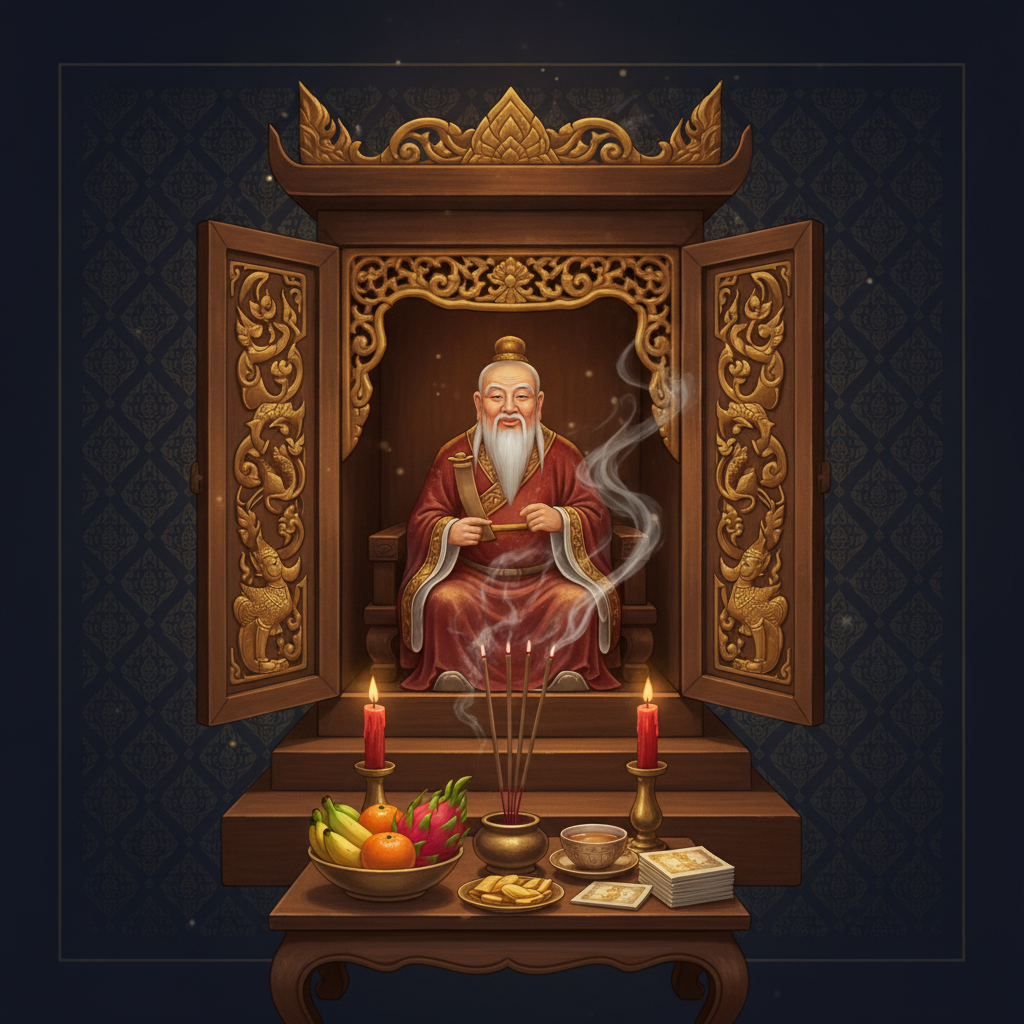
According to Chinese folk religion beliefs, Tee Chu Ia, also called "Tu Di Gong" in some regions, is the protecting deity of land and local territory. This deity functions similarly to the "Chao Thi" in Thai belief—ensuring the area remains safe, driving away evil, and serving as a representative of higher deities present in that household.
According to ancient Chinese religious texts, earth deities exist in many levels, from villages and cities down to individual households. The Tee Chu Ia placed in a home thus serves as a household-level deity, closest to the residents. Some texts mention that this deity reports household matters to higher deities during important festivals, particularly during Chinese New Year and the Ghost Festival.
In Thai homes with Chinese heritage, having Tee Chu Ia is as customary as having a spirit shrine in ordinary Thai homes, passed down through many generations. For those interested in Thai-style shrines and sacred things, you can read more at Mae Jao Hlak Muang Ban Khai Shrine, Thailand's Only Uniquely Distinctive Shrine
The Correct Placement of Tee Chu Ia
Positioning the Tee Chu Ia shrine is very important, as incorrect placement may cause energy imbalance in the home or prevent the deity from fully protecting the household.
Placement in Residential Homes
- Height level: According to belief, Tee Chu Ia should be placed lower than other deities in the home, such as lower than the heavenly deity or major gods. Generally, it is placed at a level from ground to waist height, as this deity is of the earth.
- Direction: Some texts suggest the deity should face toward the main entrance or main passage area of the home, allowing protection over those entering and leaving.
- Room placement: Common locations include corners of the living room, under staircases, or the interior front of the home. Some households place it in the kitchen or central hallway, depending on family tradition.
Placement in Shops and Businesses
- According to belief, it should be placed near the front counter or reception area, not at an excessive height.
- The deity's face should face toward the shop entrance or front street to greet customers and repel negativity.
- It should not be placed in bathrooms, dark storage areas, or directly under staircases.
Offerings to Tee Chu Ia Worth Knowing
Worshipping Tee Chu Ia involves traditional offerings, divided into daily and special occasion offerings.
Daily and Monthly Offerings
- Incense and candles: Essential items. Tradition holds to light three incense sticks on the 1st and 15th of each lunar month.
- Clean water: Offer water in small cups regularly, symbolizing purity and respect.
- Flowers: Fresh, colorful flowers, particularly star flowers and baby's breath, are popular offerings.
- Fruit: Auspicious fruits such as oranges, apples, grapes, and pineapples are offered in even numbers or auspicious quantities.
Special Occasion Offerings
- Three-layer pork or meat: According to belief, on important occasions like Chinese New Year or the Ghost Festival, boiled three-layer pork or boiled chicken is offered.
- Ceremonial cakes: Various auspicious pastries and cakes according to local tradition.
- Alcohol or tea: Some texts mention offering Chinese alcohol or tea in small cups as a sign of respect.
- Silver and gold paper: Burned as offerings on important occasions, believed to send prosperity to the deity in the spiritual world.
Important Days to Worship Tee Chu Ia Throughout the Year
According to traditional Chinese beliefs and customs, there are significant occasions when Tee Chu Ia should receive special worship:
- 2nd day of the 1st lunar month (Chinese New Year): Considered the day Tee Chu Ia ascends to heaven to report to higher deities.
- 4th day of the 1st lunar month: According to belief, the deity returns to the home and should be welcomed.
- 1st and 15th of every lunar month: Regular monthly worship observed consistently in many households.
- Ghost Festival (7th lunar month): An important occasion to worship both the earth deity and ancestors together.
- Chinese New Year and new year's day: Worship to bring prosperity to the home and business throughout the year.
For those wishing to enhance fortune alongside deity worship, read about Making Merit on Your Birthday to Enhance Life's Fortune, or try our free fortune reading tools to see the direction of your life at this time.
Precautions When Worshipping Tee Chu Ia
Beyond proper placement and worship, there are precautions that many households may overlook:
- Do not let incense ash overflow in the container without cleaning. Change the sand or clean the incense holder regularly.
- According to belief, do not move the shrine frequently without necessity. If relocation is needed, inform the deity and perform an appropriate ceremony.
- Do not place dirty things or personal items near the shrine, as this shows disrespect.
- Some texts say the deity's face should not directly face the main bedroom.
- If a home has both a Thai-style spirit shrine and Tee Chu Ia, belief holds that both should be maintained consistently; neither should be neglected.
For those interested in fortune and life enhancement this year, read more at Resolving Bad Year 2568: What It Is, Which Zodiac Signs, and Real Solutions. For personalized guidance, you can consult with our expert astrologers directly.
Frequently Asked Questions About Tee Chu Ia
At what height should Tee Chu Ia be placed?
According to traditional belief, Tee Chu Ia, as an earth deity, should be placed lower than other deities in the home. Generally, placement ranges from ground level to waist height, not as high as major deities. However, customs may vary by family and region.
Can non-Chinese heritage households worship Tee Chu Ia?
According to current belief, there is no ethnic restriction in worshipping Tee Chu Ia, as this deity represents the land and territory, not a specific ethnicity. What matters is sincere respect and consistent care in worship. If uncertain about ritual procedures, consult an expert in Chinese beliefs.
What should be done with Tee Chu Ia when moving homes?
According to belief, when relocating, inform the deity in advance and perform an appropriate farewell ceremony. Some texts suggest performing a ceremony to invite the deity to the new residence by lighting incense and making announcements at both old and new locations. The deity's statue or tablet may be taken with you, but always consult an expert first to ensure it aligns with your tradition's customs.
Worshipping Tee Chu Ia correctly and consistently is, according to belief, an expression of gratitude to the deity protecting the land where we live, whether home or workplace. What matters most is not expensive offerings or complex rituals, but sincere intention and consistent respect. To follow your personal fortune and auspiciousness daily, you can subscribe to daily personalized readings for helpful information every day.