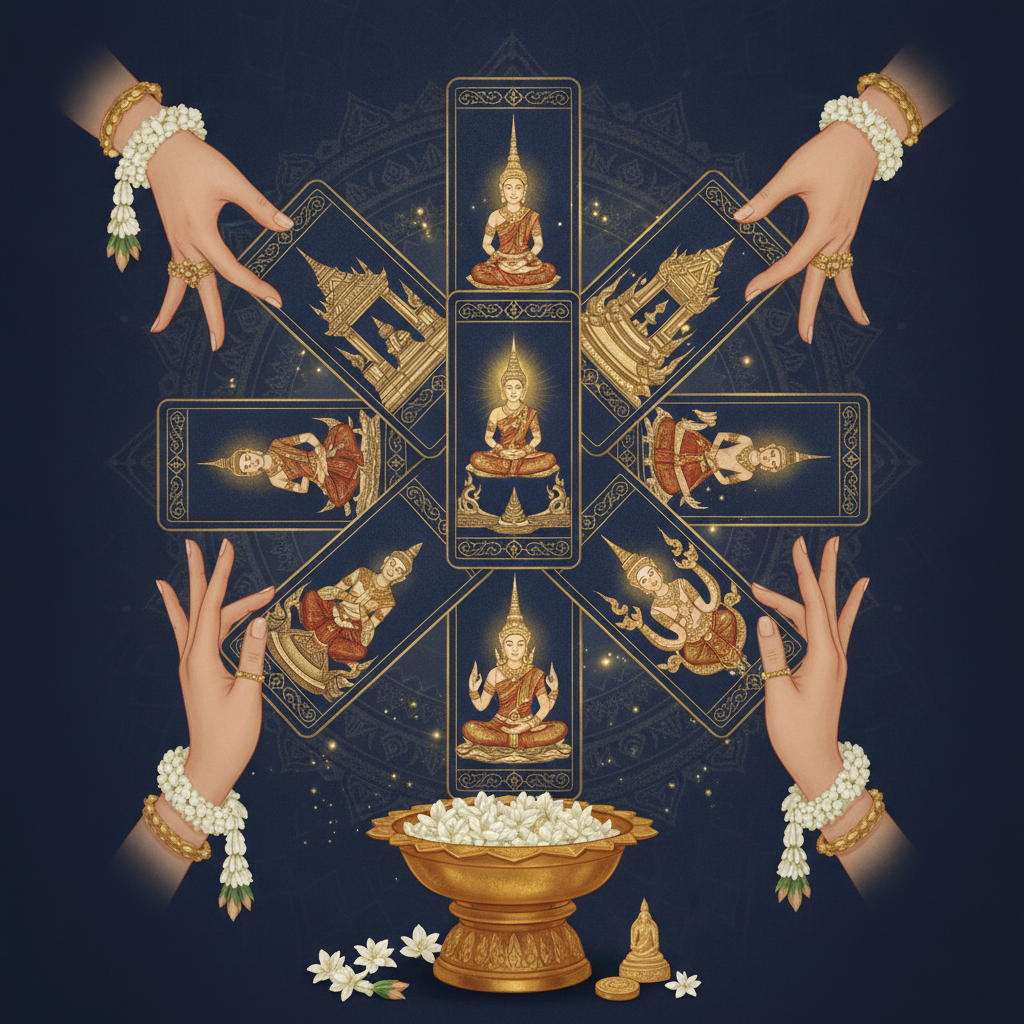
When it comes to tarot readings that deliver the most comprehensive insight, the Celtic Cross spread is widely regarded by readers around the world as the "king of spreads." Using just 10 cards, it covers the current situation, the root of the issue, surrounding influences, and future trends. If you've ever wondered what each card placed on the table actually means, this article will walk you through every position in detail.
What Is the Celtic Cross and Where Does It Come From?
The Celtic Cross spread has its roots in Western European tarot tradition and was systematically documented in the early 20th century through the writings of the Hermetic Order of the Golden Dawn. The name "Celtic" refers to the shape of a Celtic cross — a cross encircled at its intersection — which reflects the symbolic balance between the material world and the spiritual realm.
According to tarot readers, this spread does more than predict the future. It helps the querent see the "full picture of their situation" from every angle — what is happening within the mind, what those around them perceive, and what energies are moving into their life. If you'd like to experience it for yourself, you can use our free divination tool right away.
The Celtic Cross Spread: An Overview of All 10 Positions
Before diving into each card individually, it helps to understand that all 10 cards are divided into two main groups: the Cross group (the first 6 cards), which describes the current situation and the various pressures at play, and the Staff group (the last 4 cards), which addresses external factors, hopes, fears, and the final outcome. The cards are laid beginning with card 1 at the center, then expanding outward in sequence.
The Celtic Cross Spread: The Meaning of Each Position
Position 1 — The Heart of the Matter (The Present / The Heart)
The first card is placed at the center and represents the core situation the querent is currently facing. It is the "central essence" of the question — whether the matter concerns love, work, or an important decision. This card reveals what energy is most dominant in your life right now.
Position 2 — What Crosses You (The Cross / The Challenge)
Placed across the first card, this represents the obstacle or opposing force currently challenging you. Importantly, this card does not always signify something "negative." Sometimes resistance is a necessary lesson, or it may be an energy urging you to slow down and reconsider.
Position 3 — The Foundation and the Past (The Foundation / Below)
This card is placed below the cross and represents the roots of the situation — past events or deeply held subconscious beliefs that have shaped the circumstances of today. According to tarot tradition, this position often reveals truths the querent did not consciously intend to look at.
Position 4 — The Recent Past
Placed to the left of the cross, this card represents events or energies that have just passed and are still exerting influence on the present. This position helps clarify "what has just happened and is still lingering."
Position 5 — What May Come (The Possible Outcome / Above)
Placed above the cross, this card represents the highest potential or what may come to pass if things continue along their current path. According to tarot readers, this position does not represent a fixed future — it is a "possibility" that can still shift.
Position 6 — The Near Future
Placed to the right of the cross, this card represents what is about to move into your life in the near term. It is an energy that is already forming and will affect the situation within a short period of time.
Position 7 — How You See Yourself (The Self)
This card begins the Staff group and is placed at the bottom of the right column. It represents your attitude, feelings, and perspective toward the situation as it stands right now. This position sometimes reveals how you see yourself during this particular period.
Position 8 — External Influences
This card represents the energies of your environment, the people around you, or external factors affecting your situation. It often reveals "how others perceive the situation" or what outside pressures you need to contend with.
Position 9 — Hopes and Fears
This is the most profound and complex position in the spread, because according to Celtic Cross tradition, hopes and fears are often one and the same. What we hope for most is frequently what we most fear losing or never receiving. This card therefore acts as a mirror reflecting the deeper layers of the mind.
Position 10 — The Final Outcome
The last card is placed at the top of the Staff and represents the outcome most likely to manifest if all the energies in the spread continue in their current direction. Most importantly, this card must be read in conjunction with every other position in the spread — never judged in isolation — because outcomes can shift depending on our actions and mindset.
Tips for Reading the Celtic Cross More Deeply
A Celtic Cross reading becomes far more meaningful when you view the entire spread as a single narrative rather than reading each card in isolation. Try these approaches:
- Frame your question clearly. The more specific the question, the more actionable the cards' answers will be.
- Notice recurring themes. If cards from the same suit — such as Cups — appear across multiple positions, that is a signal that emotions and relationships are at the heart of the situation.
- Pay attention to card orientation. Upright and Reversed cards carry different meanings. According to tarot tradition, a Reversed card does not always mean something "bad" — it may indicate an energy that is blocked or not yet fully expressed.
- Read the relationships between positions. Pay particular attention to the pairing of positions 1 and 2 (the situation and its challenge) and positions 9 and 10 (hopes/fears and the final outcome).
If you are interested in reading symbols and divination in other forms, you may also enjoy What Is Siam Si? The Correct Way to Draw Lots and How to Truly Understand Your Reading — another divination tradition with deep roots in Thai culture.
What Types of Questions Is the Celtic Cross Best Suited For?
According to tarot tradition, the Celtic Cross spread works best with questions that are complex and require a well-rounded perspective, such as:
- How should I approach this decision when multiple factors are involved?
- Where is this relationship heading?
- What am I not yet seeing in this situation?
- What energies are surrounding my career or finances right now?
On the other hand, if your question is straightforward and calls for a simple yes-or-no answer, a smaller spread — such as a 3-card spread — may be more appropriate. If you would like guidance that is deeper and more personally relevant, you are welcome to consult one of our expert readers, who are available for in-depth sessions.
For those interested in holistic astrology, understanding the 12 Houses in Thai Astrology: A Life Map from the Zodiac can broaden your perspective on life and enrich your tarot readings with greater depth.
Frequently Asked Questions About the Celtic Cross Spread
Which tarot deck is best suited for the Celtic Cross spread?
According to most tarot readers, the Celtic Cross spread works with any full 78-card tarot deck containing both the Major Arcana and Minor Arcana. A popular choice for beginners is the Rider-Waite-Smith deck, as its imagery is rich in clear symbolism and supported by extensive reference material. Ultimately, however, the deck that feels most connected to you is the best choice.
Is reading the Celtic Cross for yourself as effective as having someone else read it for you?
According to tarot tradition, reading for yourself has the advantage of knowing the full context of your question better than anyone else. The drawback, however, is the risk of interpretive bias — we tend to want the cards to tell us what we hope to hear. An experienced reader can therefore often offer a more objective and nuanced perspective. If you'd like to try reading for yourself first, you can use our free divination tool to get started.
How often should you do a Celtic Cross reading?
According to tarot readers, you should avoid repeating the same spread for the same question too frequently, as energy needs time to move and unfold. It is generally recommended to wait at least one month before asking the same question again. That said, if the situation has changed significantly, a new reading is perfectly appropriate. If you would like to track your energy on a daily basis, consider subscribing to a personalized daily reading tailored specifically to your chart.
A Celtic Cross reading is not simply a forecast of the future — it is a conversation with yourself at a deeper level than usual. Each of the 10 positions acts like a mirror reflecting a different facet of your life in the present moment. According to tarot readers, this spread does not dictate what your life will be. Rather, it illuminates the energies currently at work and helps you make conscious choices about the best path forward for yourself. Try a reading and listen to what comes up — and you will understand why this practice has captivated people for hundreds of years.