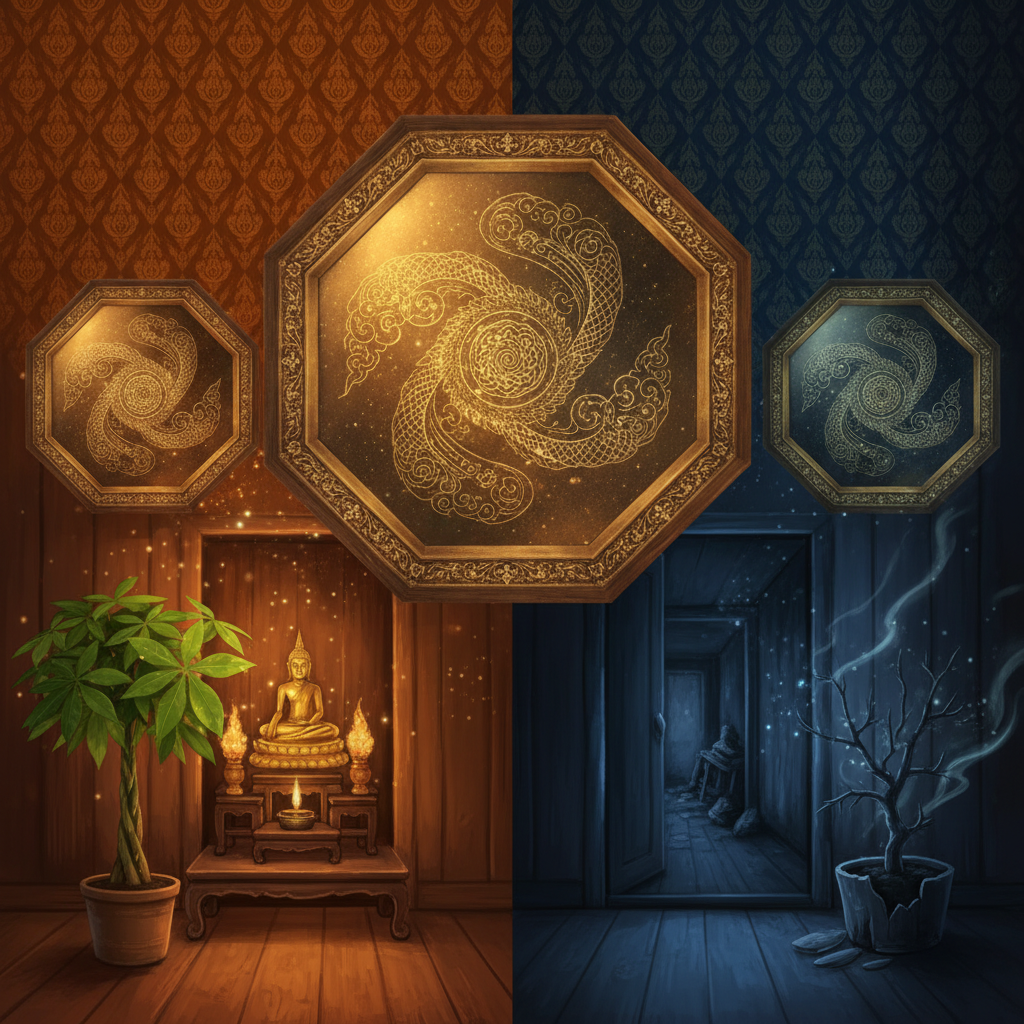
Many people know the Feng Shui mirror simply as an ordinary home decoration, but according to traditional Feng Shui texts, a mirror is considered a vital "energy weapon" capable of reflecting, amplifying, or even cutting negative energy from a living space. Placing a mirror in the right position is therefore no trivial matter — it is a discipline that demands genuine understanding.
What Is a Feng Shui Mirror and Why Does It Matter?
According to ancient Chinese Feng Shui texts, mirrors are classified among the tools of the "Ba Gua" — symbols of energy reflection. A mirror possesses the unique property of being able to reflect Chi (life energy) in both supportive and obstructive ways, depending on where and how it is placed. Ancient Feng Shui masters believed that a mirror is, in a sense, a form of "water," because its reflective surface carries an energy similar to that of flowing water — and in Feng Shui, water represents wealth and good fortune.
Beyond that, mirrors also play a role in expanding energetic space, making a room that feels cramped or stagnant appear more open and vibrant. This belief is precisely why mirrors have become one of the most popular Feng Shui tools among those who are mindful of the energy within their homes.
Favorable Positions for Feng Shui Mirrors
Placing a mirror in the right spot according to Feng Shui principles is said to significantly enhance positive energy and bring greater auspiciousness to the home.
The Living Room — Boosting Social Energy and Relationships
According to Feng Shui texts, the living room is the space that receives energy from the outside world. Placing a mirror on the side wall beside the main sofa, or in a position where it can reflect a beautiful view from a window, is considered a way of "inviting good energy" into the home. This is especially true when the reflected view includes lush greenery or a flower garden — according to this belief, it strengthens the Wood element energy, which is associated with growth and harmonious relationships.
The Dining Room — Amplifying the Energy of Abundance
This is one of the positions most recommended by Feng Shui practitioners. The texts state that placing a mirror in the dining room so that it reflects a table full of food is a way of "multiplying abundance" on an energetic level — the mirror makes it appear as though there is twice as much food, which according to this belief symbolizes a life free from lack and filled with everyday prosperity. If you are interested in exploring your home's energy on a deeper level, try using the free fortune-telling tool to discover which directions are most beneficial for your personal destiny.
Hallways and Entryways — Keeping Energy Flowing
Narrow hallways in a home often cause Chi to circulate poorly. Placing mirrors vertically along the walls of a hallway, according to Feng Shui texts, helps open up the energetic space and allows Chi to flow more freely. It is advisable to choose mirrors with attractive frames that are free of cracks or distortions, as a warped mirror is believed to reflect energy back in a distorted form.
Positions to Avoid According to Feng Shui Mirror Principles
Placing a mirror in the wrong position, according to Feng Shui texts, can be just as harmful to a home's energy as placing it correctly can be beneficial.
Directly Facing the Front Door — Reflecting Good Energy Away
This is the number one prohibition in Feng Shui texts regarding mirrors. According to this belief, placing a mirror so that it faces the front door head-on will cause the Chi flowing in through the door to be immediately reflected back out — as though "sweeping away good fortune" before it has a chance to settle. Many schools of Feng Shui therefore strongly advise against this placement without exception.
The Bedroom — Disrupting Restorative Energy
According to Feng Shui texts, the bedroom is the space where the body accumulates and stores Chi. A mirror in the bedroom — particularly one positioned to reflect the bed directly — is believed to cause the room's energy to move excessively, leading to restless sleep, nightmares, or a persistent sense of fatigue even after a full night's rest. If a mirror in the bedroom is unavoidable, it should be covered with a cloth during the night.
Facing Each Other — Creating a Loop of Trapped Energy
Placing two mirrors so that they face each other is believed in Feng Shui texts to create a looping energy with no way out — like energy trapped in an endless cycle. This is said to leave the occupants feeling confused, indecisive, or as though their lives are going in circles without any real progress.
How to Choose a Mirror That Supports Feng Shui
Beyond placement, the texts also specify the characteristics of a suitable mirror.
- Shape: Round or oval mirrors are believed to be energy-friendly, as they have no sharp corners to "cut" good energy. Square or rectangular mirrors can also be used, but their frames should have rounded rather than overly sharp edges.
- Size: Choose a size that reflects a complete image. In reception areas in particular, the mirror should reflect at least the upper half of a person's body. A mirror that cuts off the top of someone's head is considered inauspicious according to this belief.
- Condition: The mirror must be clean and free of cracks, chips, or distortions, as a damaged mirror is believed to reflect energy back in an incomplete and unfavorable form.
- Frame: A wooden frame conveys warmth and connects with the Wood element, while a metal frame strengthens the Metal element, which is associated with clarity and decision-making. Choose according to the dominant element of the home's occupants.
If you are unsure what your dominant element is or which direction you should be channeling your energy, subscribe to receive your personalized daily horoscope for guidance tailored specifically to your destiny.
The Ba Gua Mirror — A Powerful Feng Shui Mirror That Demands Caution
The Ba Gua Mirror is a circular mirror surrounded by the eight trigram symbols. According to the texts, it is considered an exceptionally high-powered Feng Shui mirror — and one that must be used with great care.
According to this belief, Ba Gua mirrors come in two main types: the convex type, which is used to reflect and disperse negative energy outward, and the concave type, which is used to absorb negative energy inward. In general, the texts recommend installing a Ba Gua mirror only on the exterior of the home — such as above the front door on the outside — to ward off negative energy from without. It should never be hung inside the home, as it is believed that doing so will unintentionally reflect that energy back onto the occupants themselves.
Frequently Asked Questions About Feng Shui Mirrors
Is It Acceptable to Place a Mirror in the Bathroom According to Feng Shui?
According to Feng Shui texts, the bathroom is considered a space where energy drains out of the home. Placing a mirror in the bathroom is generally not considered a violation of Feng Shui principles, but it is advisable to avoid positioning the mirror so that it reflects directly toward the toilet or drain — as this is believed to "amplify the outflowing energy," which may negatively affect the home's financial energy.
Do Sliding Wardrobe Mirrors Count as Feng Shui Mirrors?
According to Feng Shui texts, every mirror in the home has an effect on energy — including sliding wardrobe mirrors. If the wardrobe is in the bedroom and its mirror reflects the bed directly, it is advisable according to this belief to keep the wardrobe doors fully closed at night, or to consider replacing them with solid, non-mirrored doors.
Where Should I Place a Mirror to Attract Good Fortune?
According to Feng Shui texts, the southeast corner of the home is considered the direction of wealth. Placing a mirror in that corner so that it reflects something auspicious — such as lush greenery, a natural landscape, or decorative objects symbolizing abundance — is believed to strengthen the energy in that area. That said, if you would like more detailed guidance tailored to your personal destiny, it is recommended that you consult with an expert practitioner for an analysis of the directions most suited to you specifically.
Arranging Feng Shui mirrors in your home is not something that needs to cause undue anxiety. However, understanding the basic principles — which positions enhance energy and which should be avoided — will help you create a living environment that feels more balanced and comfortable. Feng Shui texts hold that good energy within the home is a vital foundation for a smooth and harmonious life, and a mirror, small as it may be, plays a role in that foundation that should not be overlooked.